 SavvyCal Docs
Integrating with Zapier
Zapier is a service for creating workflow automations between different apps. For example, you could use Zapier to post a message to Slack anytime someone books a time via one of your SavvyCal links. In this guide, we'll walk through how to connect SavvyCal to Zapier!
Creating your first zap
Head to your Integrations page and click the + button on the Zapier panel under Automation:
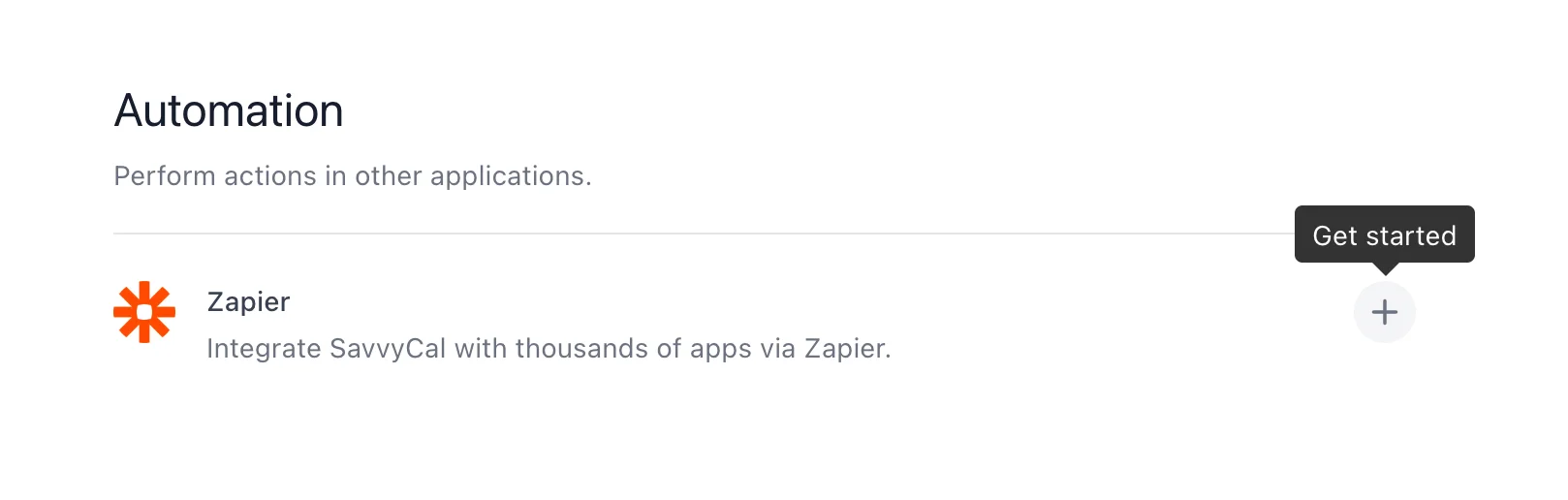
Then, follow the prompts to either choose a Zap Template or create your own zap from scratch using one of our triggers.
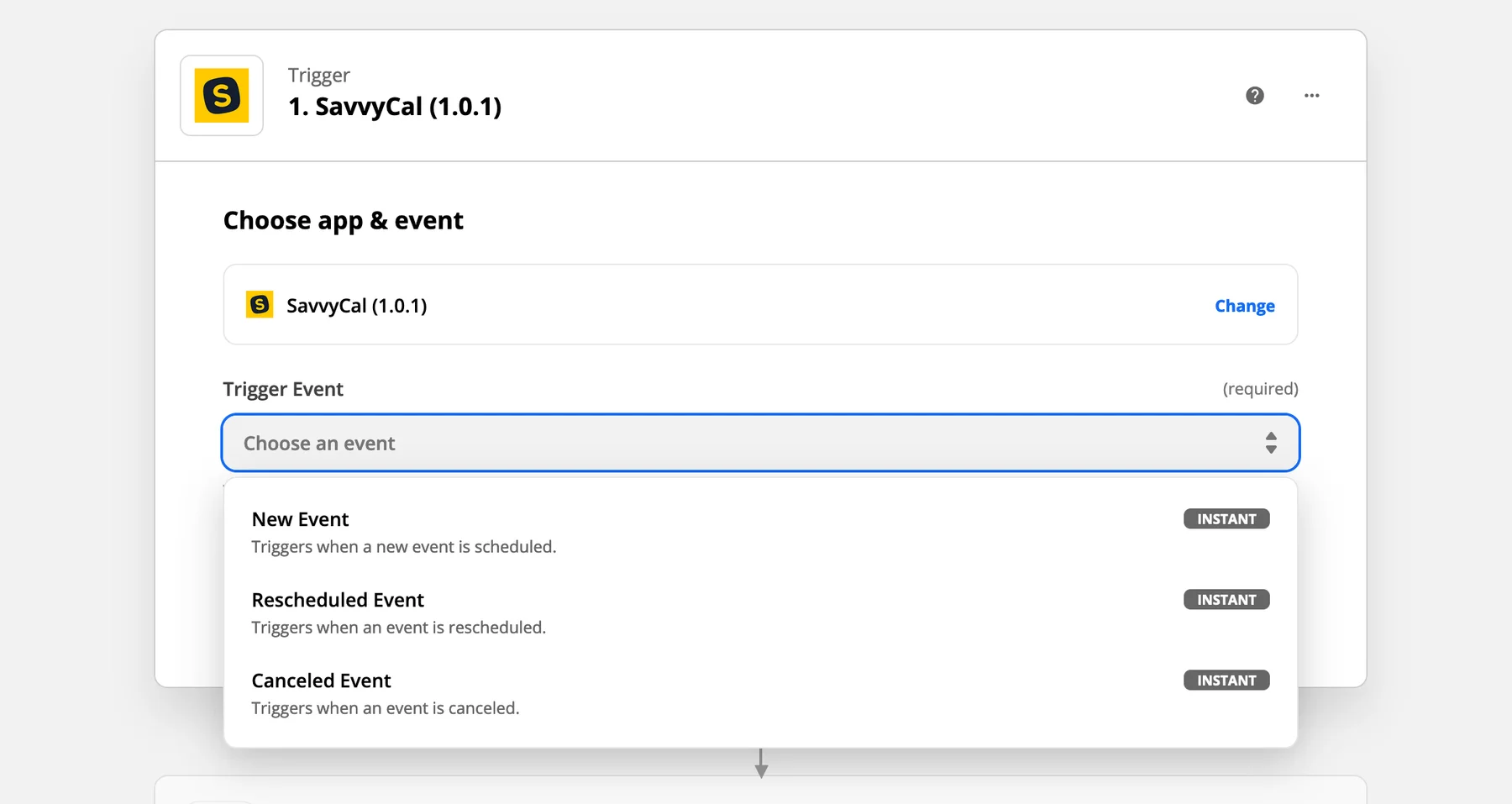
You'll see the SavvyCal triggers in the Trigger Event dropdown. Choose the one that you would like to key off of for your automation and click Continue.
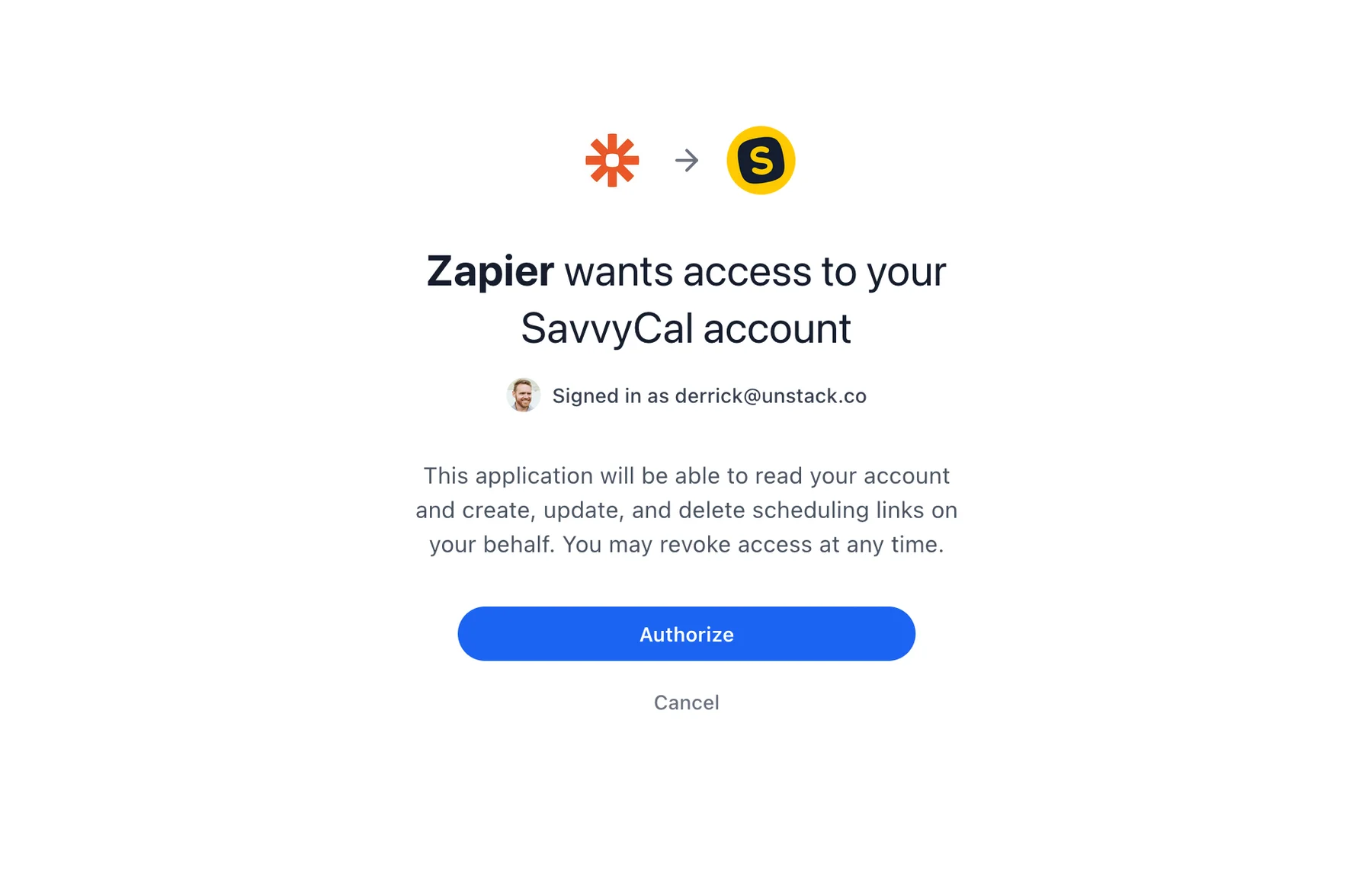
Next, click Sign in to SavvyCal and authorize access:
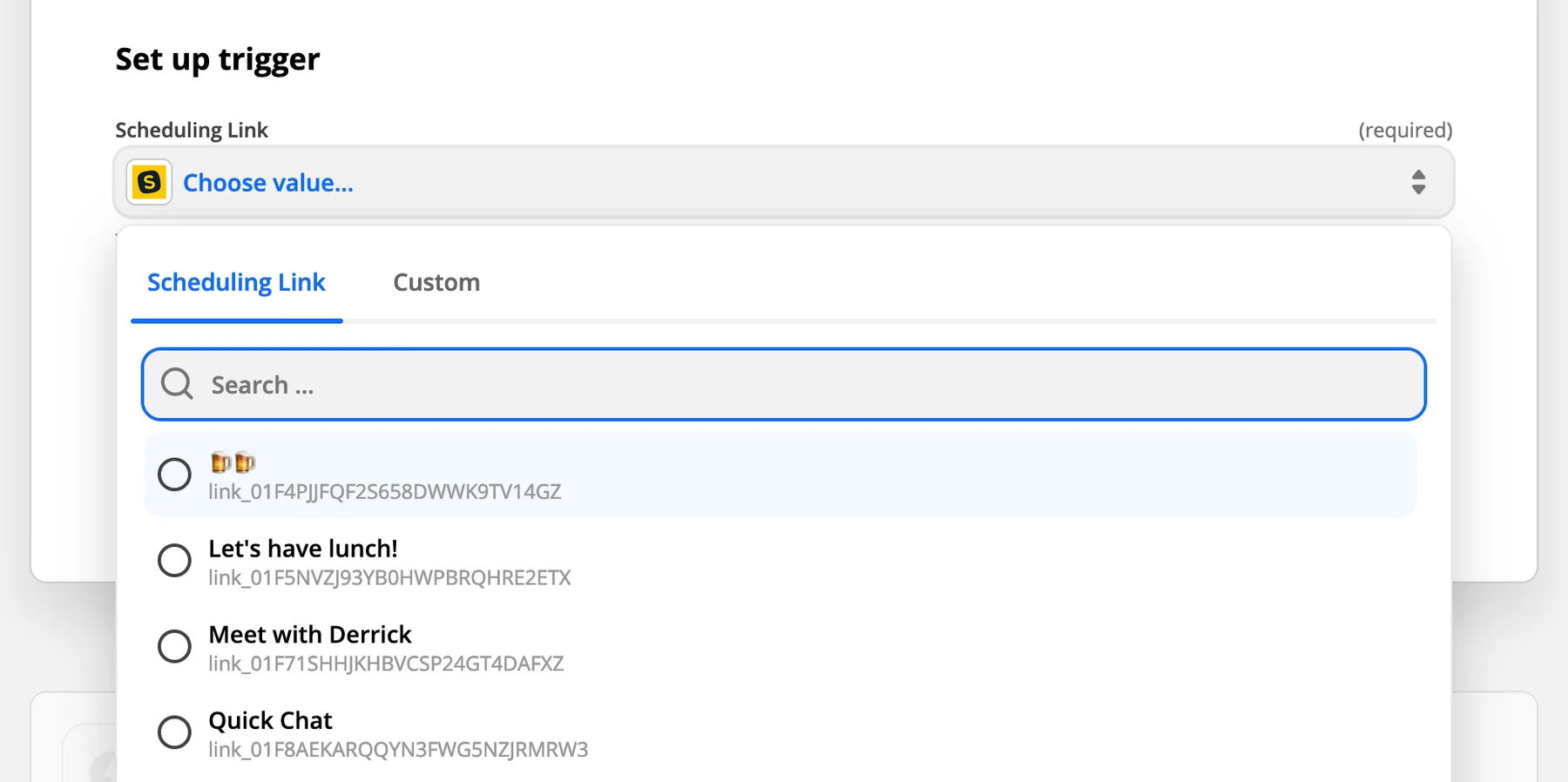
Under Scheduling Links, choose the links you'd like to listen for. You can pick more than one. Leave it blank to listen to every scheduling link you can access.
When prompted, click Test Trigger to verify we are connected properly, and then click Continue. Your trigger is now configured!
When you turn on a zap, Zapier adds a webhook to your SavvyCal account, which you'll see under Webhooks on the Integrations page. Don't delete it, or the zap will stop getting new events. See Webhooks.
Which triggers are there?
| Trigger | When it fires |
|---|---|
| New Event | A new event is scheduled |
| New Event Request | A new event is requested and needs your approval. See Require approval for new events. |
| Approved Event | You approve an event |
| Declined Event | You decline an event |
| Rescheduled Event | An event is rescheduled |
| Canceled Event | An event is canceled |
| Pending Event Checkout | Someone books a paid event and hasn't paid yet. See Collecting payments with Stripe. |
| Completed Event Checkout | Someone pays for a paid event |
| Expired Event Checkout | Checkout for a paid event expires without payment |
| New Event Attendee | Someone is added to or joins an existing event. See Creating zaps for group events. |
| Rescheduled Event Attendee | Someone reschedules out of a group event |
| Canceled Event Attendee | Someone cancels out of a group event |
| Triggered Workflow | A workflow's Trigger a zap action runs. See below. |
SavvyCal's Zapier app has triggers only, so a zap can't create or change anything in SavvyCal. To do that from your own code, use the REST API.
Can a zap run at a set time before or after a meeting?
Yes. The triggers above fire as soon as something happens. To run a zap at a time you choose, such as 15 minutes before a meeting starts or 1 day after it ends, add a Trigger a zap action to a workflow, then use the Triggered Workflow trigger in Zapier. Instead of scheduling links, you'll choose the Workflow and the Action.
Workflows only run on a paid plan. For the full setup, see Triggering zaps and webhooks from workflows.
Configuring an action
Next, Zapier will prompt you to create an Action. Suppose we want to send a notification email and include the scheduler's name in the subject line (e.g. "Sally Scheduler just scheduled a meeting"). For the sake of demonstration, we'll choose the Email by Zapier action. If you click on the Subject field, you'll see a menu containing fields you can use:
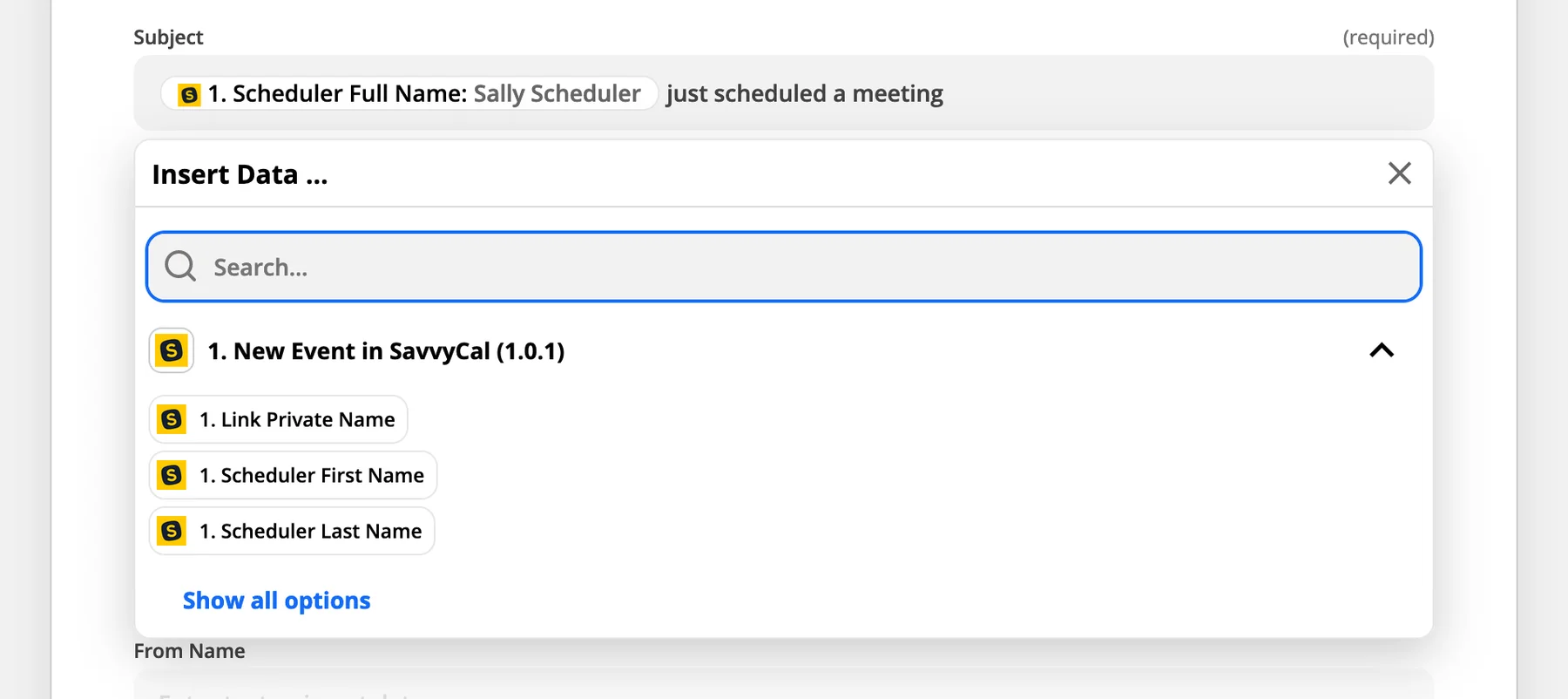
Here are the most common fields you'll use:
-
Information about the person who scheduled (for One-on-One and Round Robin events)
Scheduler EmailScheduler First NameScheduler Last NameScheduler Full Name(first & last names combined)Scheduler Phone NumberScheduler QuestionsandScheduler Answers(all of the custom question data), orScheduler Question [#]andScheduler Answer [#]for one question at a time
-
Information about the event
Event SummaryEvent Start AtEvent End AtEvent Duration (minutes)Event URLEvent ID
-
Information about the scheduling link
Link Name(e.g. "Demo")Link Private NameScope Name(e.g. "SavvyCal")
-
Tracking and payment
UTM Source,UTM Medium,UTM Campaign,UTM Term, andUTM Content. See Using UTM parameters.Event Payment Amount Totaland the other payment amounts, for paid events
Creating zaps for group events
Group scheduling mode allows accepting more than one scheduler for each time slot on your scheduling links. Because there are multiple schedulers for these types of events, the Zapier triggers behave a little differently:
- The
New Event Attendeetrigger will fire any time someone joins the group event, including the first person to schedule. This is the trigger type you'll want to use for group events if you want to perform actions anytime someone creates or joins a group event (not theNew Eventtrigger). - The
Rescheduled Event Attendeetrigger will fire any time someone reschedules from a group event. - The
Canceled Event Attendeetrigger will fire any time someone cancels from a group event. - The
New Eventtrigger will fire when the first person books a new group event. Their information will be captured in the list of guests on the event, but the scheduler data will be empty in this payload (soNew Event Attendeeis likely what you'll want to use!).
You can find information for the attendee that triggered the zap under the attendee key (e.g. "Attendee Email", "Attendee First Name", etc.).
Still have a question? Contact support.